
Subaru WRX Models
WRX 2nd Generation (2000 – 2007 GD/GG)
The Second Generation Subaru WRX: A Deep Dive into the “New Age” Impreza (2000-2007)
The second generation of the Subaru WRX, produced from 2000 to 2007, marked a significant phase of refinement and evolution. This era underscored Subaru’s commitment to enhancing engine performance, upgrading design aesthetics, and integrating advanced technologies. The advancements were not just limited to the base WRX model; variations such as the WRX STI offered enthusiasts a more potent, performance-oriented option.
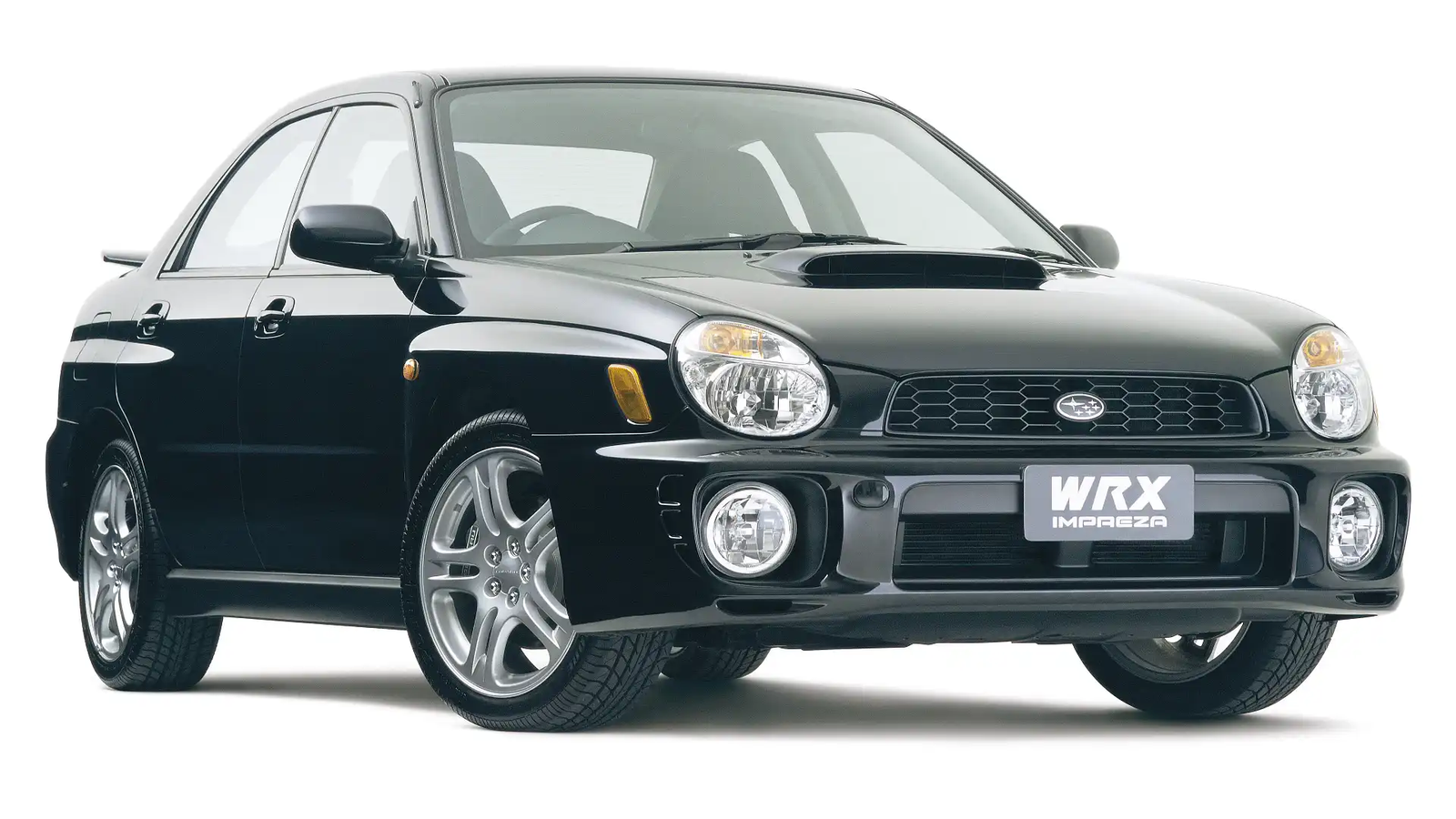
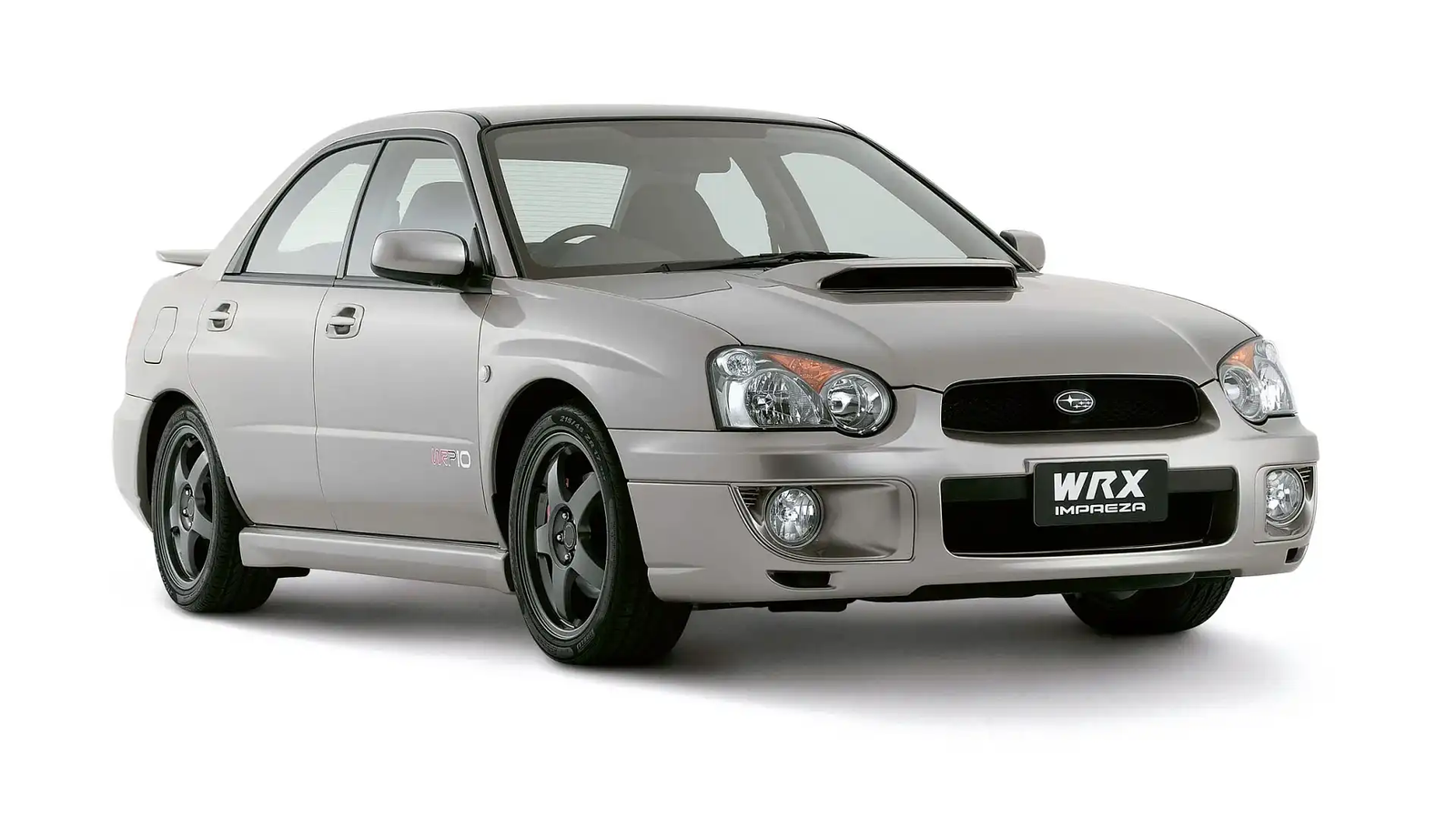
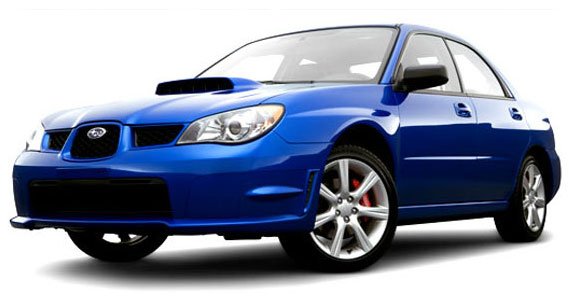
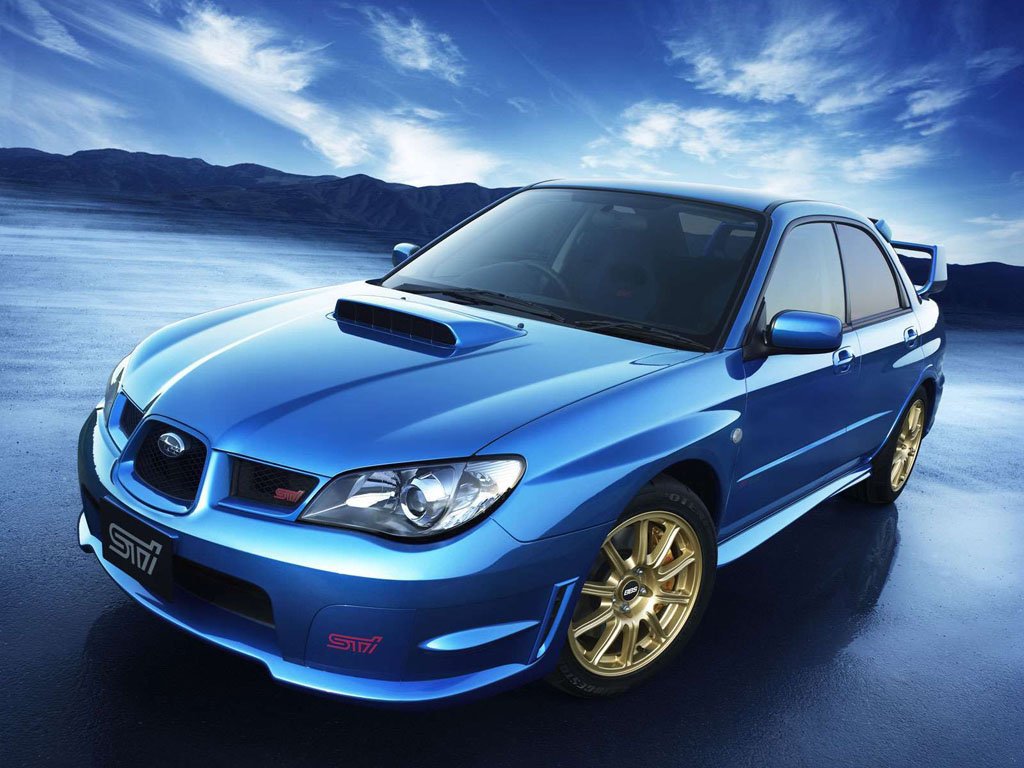
The second generation, often affectionately dubbed the “New Age” Impreza, broke away from the beloved GC8 chassis, ushering in a new era of design, technology, and market expansion. Spanning model years 2000 to 2007, this generation saw three distinct facelifts, each earning its own enthusiast nickname: the “Bug-Eye,” “Blob-Eye,” and “Hawk-Eye.” This period cemented the WRX’s global reputation, particularly with its long-awaited arrival in North America.
The engines of the second-generation WRX saw notable improvements. The introduction of the 2.0-liter turbocharged EJ20, and later the 2.5-liter EJ255 for the North American market, delivered increased power and torque, catering to a growing demand for high-performance vehicles. The WRX STI variant, in particular, stood out with its 2.0-liter EJ207 and the 2.5-liter EJ257 engines, which provided superior performance metrics, making it a favorite among rally and motorsport enthusiasts.
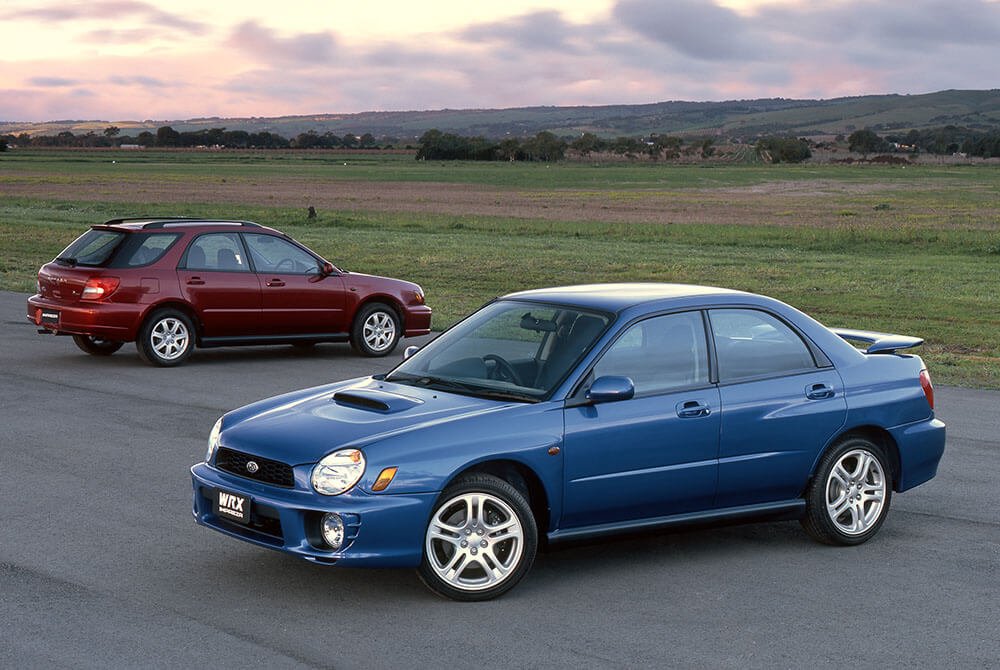
Design changes in this generation brought a more aggressive and aerodynamic profile, which not only enhanced the car’s visual appeal but also improved its performance. The “bug-eye” headlights of the early models were later replaced with a more refined and conventional design, addressing both aesthetic preferences and functional requirements. The introduction of wider fenders, a larger hood scoop, and a rear spoiler emphasized the WRX’s sporty character.
Technological enhancements were another hallmark of the second generation. The inclusion of advanced all-wheel-drive systems, improved suspension setups, and better braking systems contributed to the WRX’s reputation for excellent handling and stability. The WRX STI, with its driver-controlled center differential (DCCD) and advanced electronic aids, set a new standard for performance in its class.
Motorsport successes during this period significantly bolstered Subaru’s brand reputation. Dominating in the World Rally Championship (WRC) with multiple victories, the WRX STI became synonymous with rally success. These achievements not only elevated the WRX’s status among performance car enthusiasts but also cemented Subaru’s position as a leader in automotive engineering and innovation.
The Dawn of the “New Age”: The Bug-Eye (2000-2003)
The second-generation Impreza (chassis codes GD for sedan, GG for wagon) debuted in Japan in August 2000 as a 2001 model year vehicle. It marked a significant departure from its predecessor in almost every aspect.
Design and Initial Reception
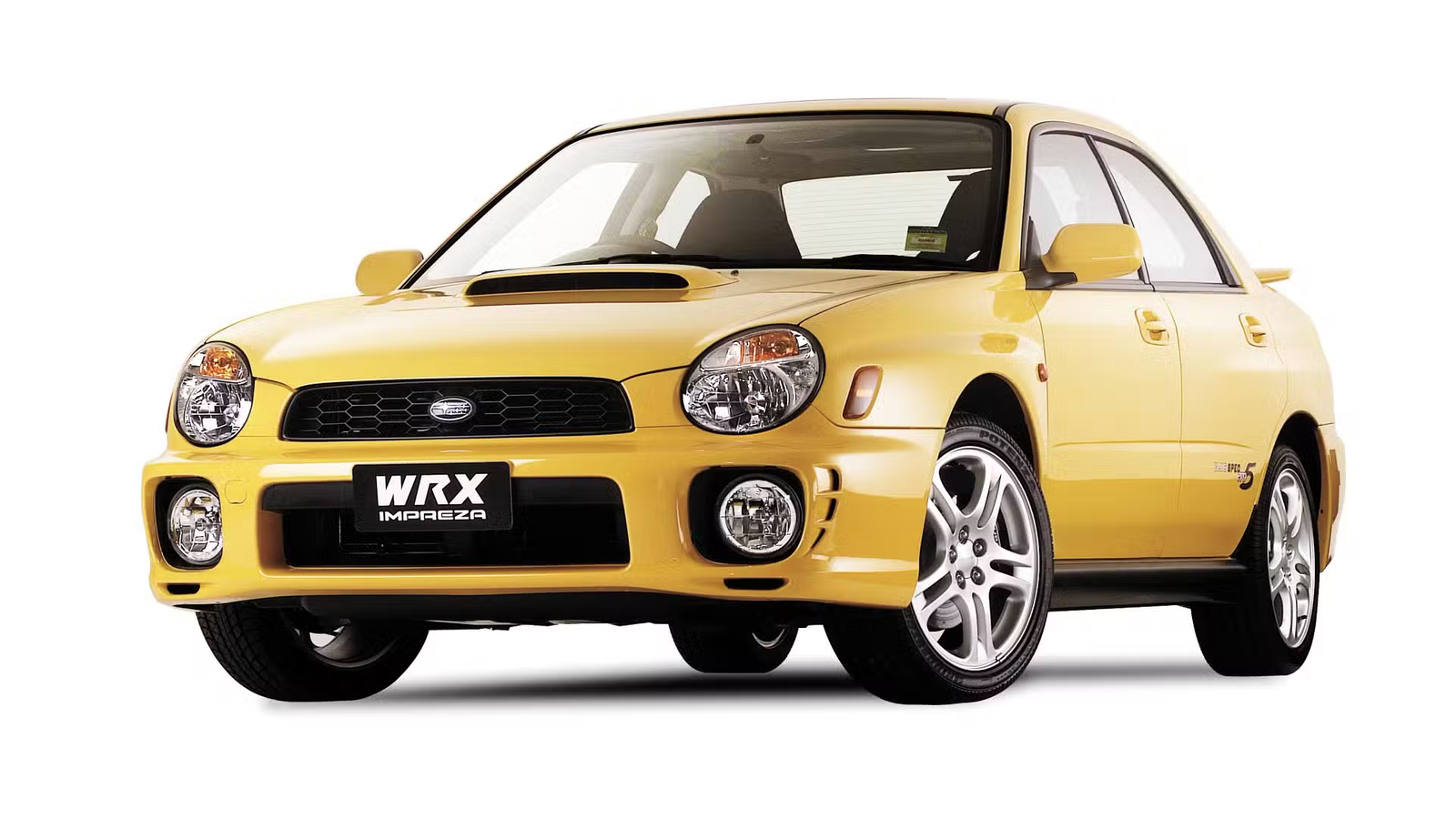
Subaru aimed for a more aerodynamic, safer, and refined vehicle. The most striking and controversial change was the front-end styling, characterized by large, circular headlights that quickly earned it the “Bug-Eye” moniker. While polarizing, the design was functional, contributing to improved pedestrian safety and reduced drag. The body was stiffer, larger, and heavier than the GC8, but offered enhanced crash protection and a more comfortable ride.
Chassis and Engineering
The new GD/GG platform featured:
- Stiffer Body: Increased torsional rigidity for improved handling and safety.
- Revised Suspension: MacPherson struts remained, but geometry was optimized for better stability and ride quality. Aluminum lower control arms were often featured.
- Improved NVH: Efforts were made to reduce noise, vibration, and harshness, making the WRX a more refined daily driver.
Engines and Drivetrain – Global vs. USDM Debut
The engine offerings varied significantly by market:
- Japanese Domestic Market (JDM) WRX (2000-2003):
- EJ205: 2.0-liter turbocharged flat-four. Initially producing around 250 PS (184 kW) for the sedan and 240 PS (177 kW) for the wagon, paired with a 5-speed manual transmission.
- JDM WRX STI (2000-2003):
- EJ207: A highly tuned 2.0-liter twin-scroll turbocharged flat-four, featuring AVCS (Active Valve Control System) variable valve timing on the intake camshafts. Power was rated at the Japanese gentleman’s agreement limit of 280 PS (206 kW), though actual output was often higher. It came exclusively with a close-ratio 6-speed manual transmission. STI models also boasted larger Brembo brakes, revised suspension, and a more aggressive aero package.
- North American (USDM) WRX (2002-2003):
- North America finally received the WRX for the 2002 model year, a momentous occasion for enthusiasts. It was powered by the EJ205 2.0-liter single-scroll turbocharged engine, producing 227 hp (169 kW) and 217 lb-ft (294 Nm) of torque. It was available with a 5-speed manual or a 4-speed automatic transmission. This marked the first official WRX import to the US and Canada.
- The USDM WRX did not receive the STI variant during these initial “Bug-Eye” years.
Interior and Features
The interior was completely redesigned, offering a more modern layout, improved materials, and better ergonomics than the GC8. Standard features included automatic climate control, sport seats, and a CD player.
The Refined Aggression: The Blob-Eye (2004-2005)
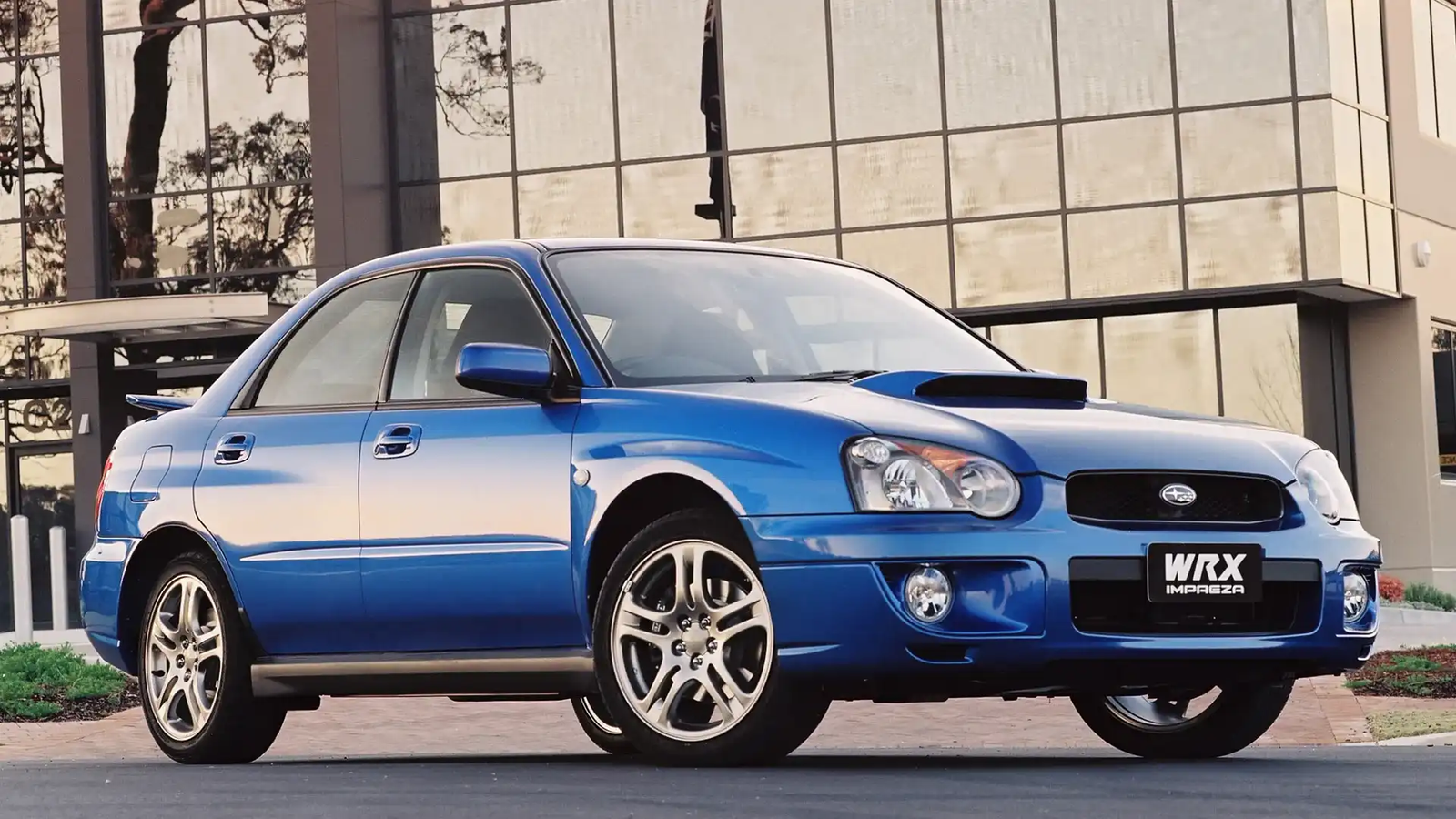
For the 2004 model year, Subaru introduced the first major facelift for the second-generation Impreza, quickly dubbed the “Blob-Eye” due to its less angular, more rounded headlights and redesigned grille. This iteration aimed to address some of the aesthetic criticisms of the Bug-Eye while simultaneously bringing significant performance upgrades, particularly to the USDM market.
Exterior and Interior Updates
- Front End: New, larger headlights that flowed more smoothly into the fenders, a revised grille with a central bar, and a restyled front bumper gave the car a more cohesive and aggressive look.
- Interior: Minor revisions, including updated trim materials and potentially revised gauge clusters.
Engine and Drivetrain Evolution
This period saw critical engine changes, especially for the North American market:
- USDM WRX (2004): Retained the EJ205 2.0-liter engine (227 hp).
- USDM WRX (2005): A significant upgrade. The WRX received the EJ255 2.5-liter turbocharged flat-four engine, producing 230 hp (172 kW) and 235 lb-ft (319 Nm) of torque. This engine featured AVCS on the intake camshafts, providing a broader torque curve and improved drivability compared to the 2.0L.
- USDM WRX STI (2004-2005): The long-awaited STI finally arrived in North America for the 2004 model year. It was powered by the EJ257 2.5-liter turbocharged engine, generating 300 hp (224 kW) and 300 lb-ft (407 Nm) of torque. Key STI features included:
- Driver Controlled Centre Differential (DCCD): A sophisticated electronic/mechanical limited-slip center differential allowing the driver to adjust torque distribution manually or automatically.
- 6-Speed Manual Transmission: A robust, close-ratio unit.
- Brembo Brakes: Large, gold-painted calipers with ventilated rotors all around.
- Wider Track and Fenders: To accommodate wider wheels and tires, enhancing grip and stability.
- Revised Suspension: Stiffer springs, larger anti-roll bars, and inverted struts for superior handling.
- Larger Top-Mount Intercooler.
- Aggressive Aerodynamics: Large rear spoiler, front lip, and side skirts.
- JDM WRX/STI (2004-2005): Continued with the EJ205 and EJ207 2.0-liter engines, respectively, with minor refinements and power tweaks throughout the years. JDM STIs often featured unique tuning, lighter components (like the Spec C), and specific limited editions.
The Final Form: The Hawk-Eye (2006-2007)
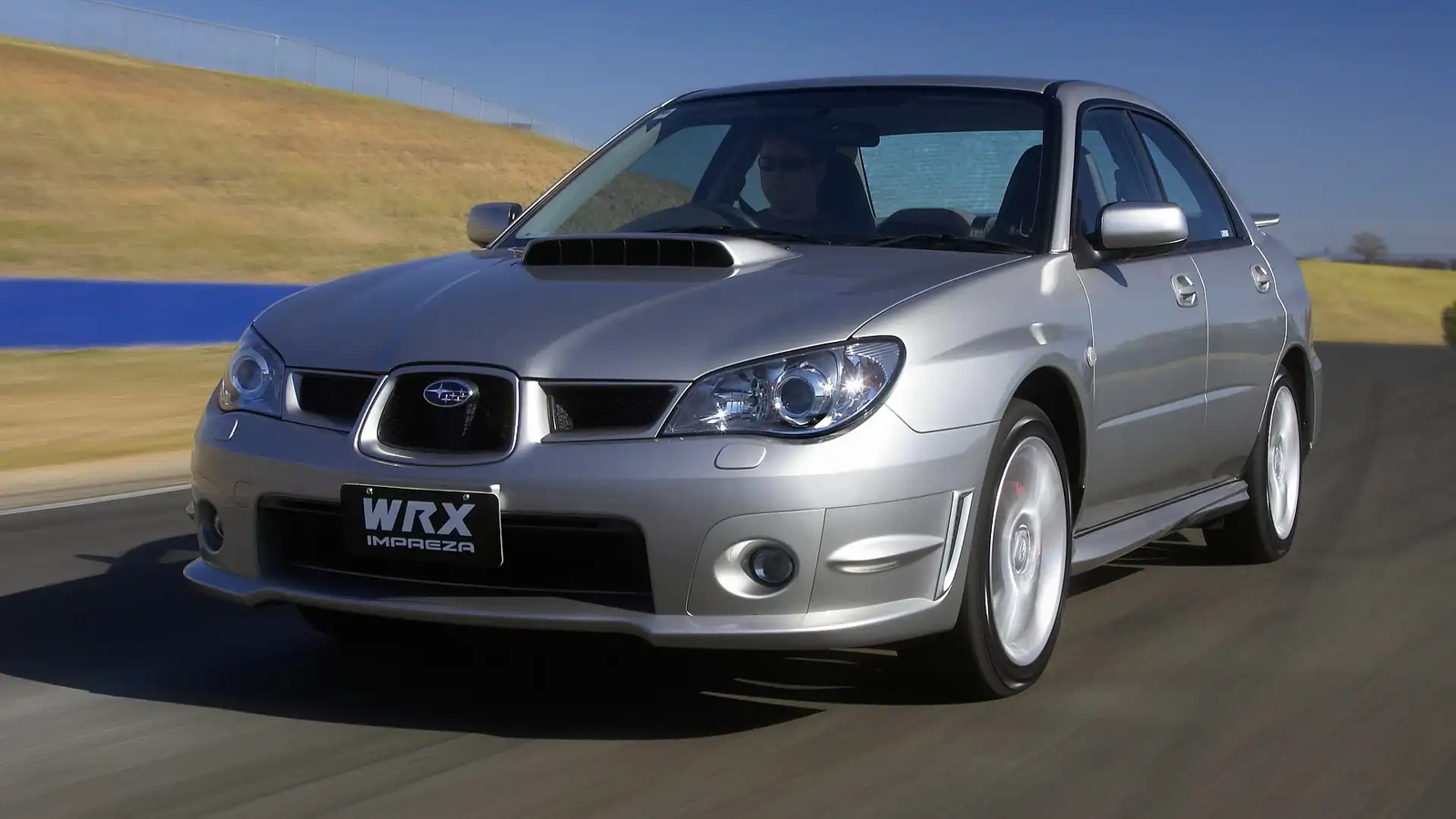
The third and final iteration of the second-generation Impreza, introduced for the 2006 model year, received another comprehensive facelift. Known as the “Hawk-Eye,” this version presented the most aggressive and modern styling of the GD/GG chassis.
Exterior and Interior Updates
- Front End: Sharper, more angular headlights, a new grille with a prominent central “wing” motif (similar to the new corporate face), and a redesigned bumper gave the car a more sophisticated and purposeful look.
- Rear End: Updated taillight clusters and a subtly revised boot lid.
- Interior: Minor revisions, including a new steering wheel, updated gauge cluster graphics, and trim enhancements.
Engine and Performance Enhancements
The Hawk-Eye generation brought further engine refinements and standardization, particularly for the WRX:
- USDM WRX (2006-2007): The EJ255 2.5-liter engine received further development, now featuring AVCS on both the intake and exhaust camshafts. This boosted power to 230 hp (172 kW) and 235 lb-ft (319 Nm) of torque, but with a flatter, more accessible torque curve across the rev range. A larger turbocharger also contributed to improved response.
- USDM WRX STI (2006-2007): The EJ257 2.5-liter engine also gained dual AVCS, maintaining its 300 hp (224 kW) and 300 lb-ft (407 Nm) output but with enhanced efficiency and responsiveness. Performance remained top-tier, solidifying its reputation as a rally-bred street machine.
- JDM WRX/STI (2006-2007): Continued with their respective EJ205 and EJ207 engines, often with market-specific tuning and special editions like the S204 and WRX STI Spec C Type RA-R, which offered extreme performance and limited production numbers.
Drivetrain and Chassis
The 5-speed manual remained standard for the WRX, while the STI continued with its robust 6-speed manual and DCCD system. Chassis tuning saw minor refinements, but the core suspension and braking systems carried over from the Blob-Eye STI.
Legacy and Impact
The second-generation Subaru WRX played a pivotal role in the brand’s history.
- Global Expansion: Its introduction to North America transformed Subaru’s image, proving that practical AWD vehicles could also be thrilling performance cars.
- Rally Homologation: It continued the WRX’s strong legacy in rally, capturing numerous championships worldwide in its WRC form.
- Enthusiast Icon: Despite its controversial initial styling, the “New Age” WRX, in all its Bug-Eye, Blob-Eye, and Hawk-Eye forms, became an enduring icon for tuners and driving enthusiasts. Its robust drivetrain, turbocharged flat-four engine, and symmetrical all-wheel drive offered a unique blend of performance, practicality, and year-round usability.
From its polarizing debut to its aggressive final form, the second-generation Subaru WRX demonstrated Subaru’s commitment to continuous evolution, cementing its place as one of the most significant performance cars of its era.
Interesting Facts
- The first WRX models available in North American markets
- The initial “bugeye” front end styling (2000) was superseded by the “blobeye” in (2004) and the “hawkeye” in (2006)
- Under an agreement between Fuji Heavy Industries and General Motors, Saab sold its own version of the WRX, marketed as the Saab 9-2X, for the 2005 and 2006 model years
- At the Australian Wheels Car of the Year, the car won the overall COTY award in 2000. At the American MotorWeek Drivers’ Choice Awards, the Impreza won the Best Sport Sedan in 2002 and the Best Performance Car in 2004.