
Subaru WRX Models
1st Generation (1992 – 2000 GC/GF/GM)
The Genesis of a Legend: A Comprehensive History of the First Generation Subaru WRX (1992-2000)
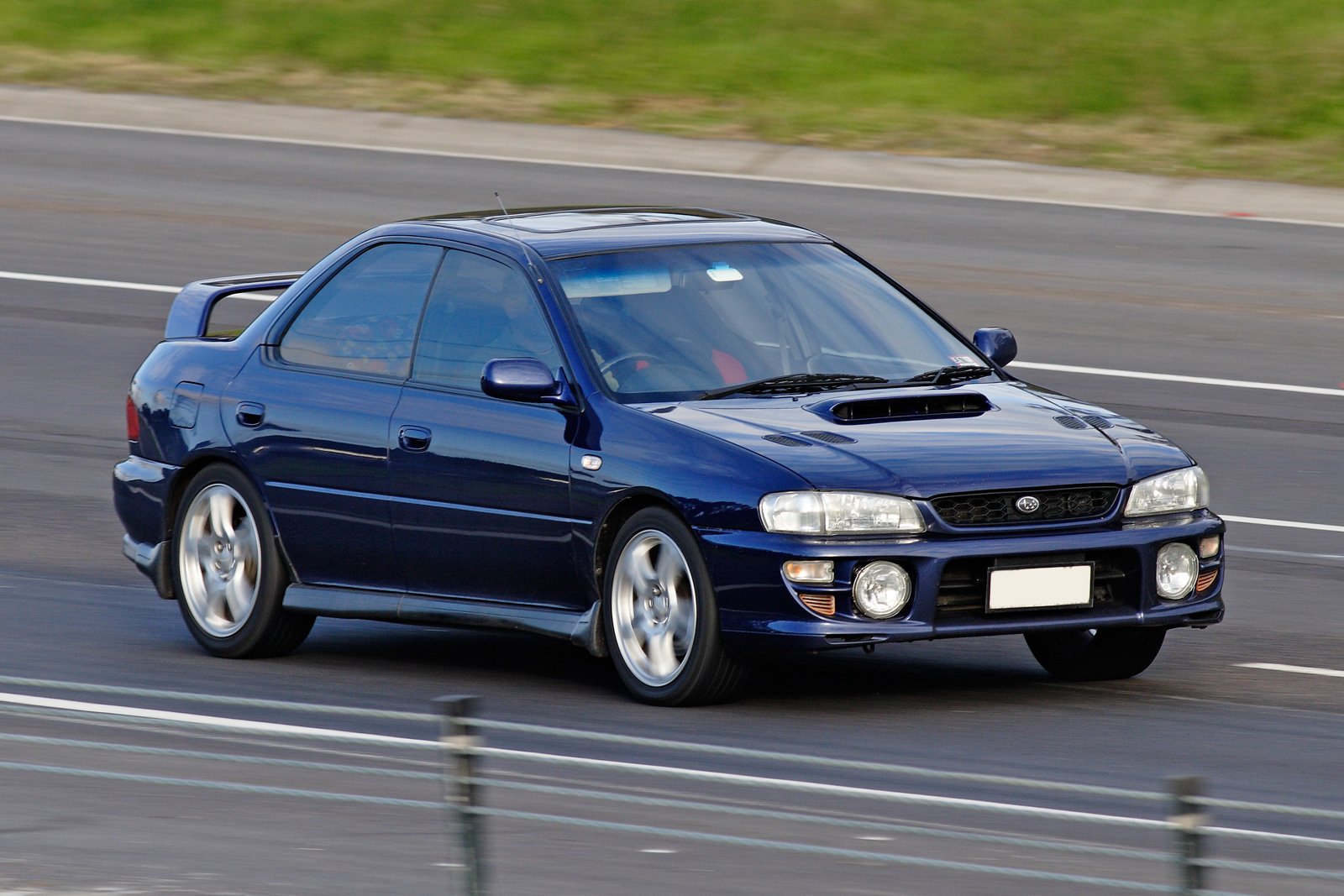
The introduction of the Subaru WRX in the early 1990s marked a significant milestone for the Japanese automaker. Unveiled in 1992, the WRX—short for World Rally Experimental—was a testament to Subaru’s rally racing pedigree. This first-generation model was characterized by its turbocharged engine and all-wheel drive system, features that would become the hallmark of the WRX line.
Powered by a 2.0-liter turbocharged flat-four engine, the original WRX delivered impressive performance for its time. The turbocharged engine generated substantial power, setting the WRX apart from its competitors. Coupled with Subaru’s Symmetrical All-Wheel Drive, the vehicle offered exceptional handling and stability, making it a favorite among driving enthusiasts and rally drivers alike.
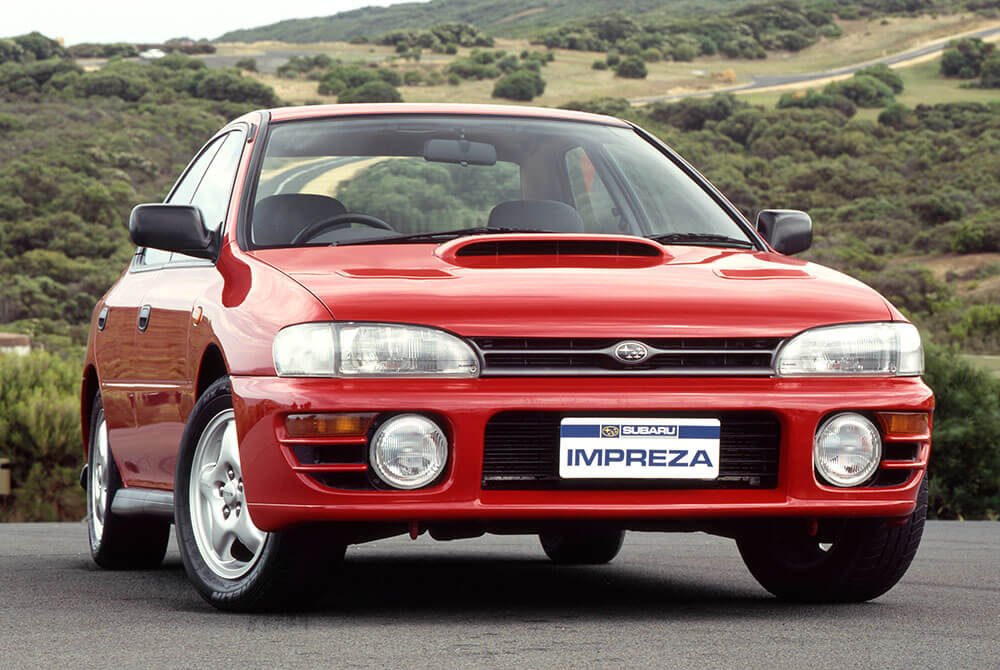
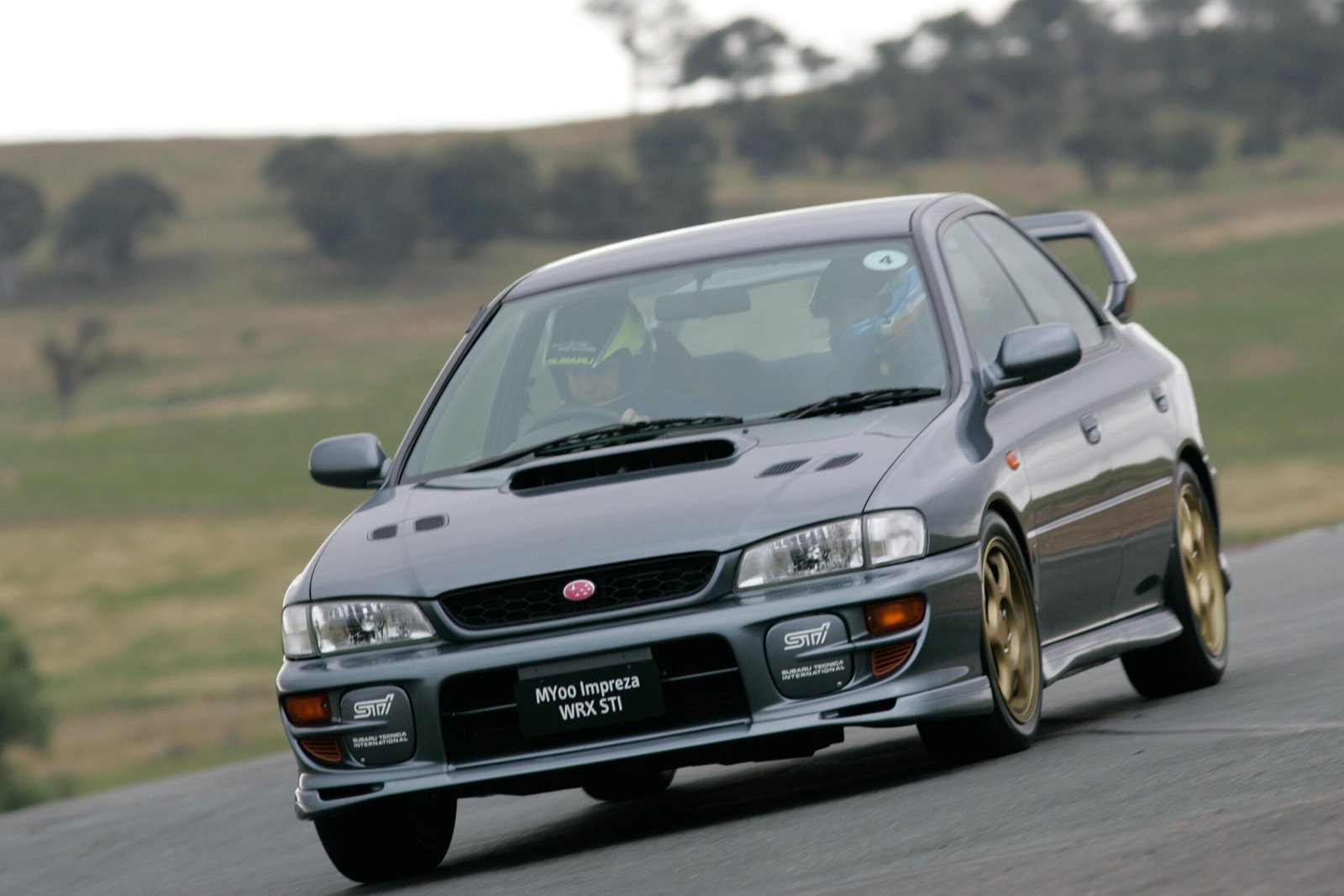
The first-generation WRX saw several notable sub-models and iterations, each contributing to its growing legacy. The WRX STI, introduced in 1994, brought even more performance to the table with upgraded suspension, brakes, and a more powerful engine. This model quickly gained a reputation for its rally-bred capabilities and became a cornerstone of Subaru’s performance lineup.
Throughout the ’90s, the WRX continued to evolve with enhancements in technology and design. Notable improvements included better aerodynamics, refined engine tuning, and the introduction of advanced safety features. Models like the WRX Type RA and WRX Type R added to the diversity of the lineup, offering specialized performance and lightweight configurations aimed at the enthusiast market.
The initial reception of the Subaru WRX was overwhelmingly positive, earning accolades for its blend of performance, practicality, and reliability. Enthusiasts praised its capability on both tarmac and gravel, solidifying its status as a versatile sports sedan. By the end of the first-generation production in 2000, the WRX had established itself as a formidable player in the performance car segment, setting the stage for future generations.
The Subaru WRX is more than just a car; it’s a legend forged in the crucible of rally racing. Born from Subaru’s relentless pursuit of World Rally Championship (WRC) glory, the first-generation Impreza WRX (GC/GF chassis) redefined performance for the masses, offering blistering speed, tenacious all-wheel-drive grip, and a distinctive boxer burble that captured the hearts of enthusiasts worldwide. This page delves into the rich history, intricate model variations, and technical specifications of this iconic era, spanning from its 1992 debut to its swansong in 2000.
The Birth of a Rally Icon: Early Models (1992-1994)
Subaru’s rally efforts in the late 1980s and early 1990s with the larger Legacy RS Turbo had proven the potential of their all-wheel-drive, turbocharged boxer engine formula. However, the Legacy was too large and heavy to be truly competitive against nimbler rivals. The solution arrived in 1992 with the introduction of the compact Impreza, and crucially, its high-performance variant: the WRX.
The “WRX” moniker stood for “World Rally eXperimental” (or sometimes “World Rally Cross” depending on the source), clearly signaling its motorsport intentions. Designed from the ground up to be a homologation special, the first WRX was a revelation.
GC8A (November 1992 – September 1993)
The very first Impreza WRX, designated GC8A for the sedan (GF8A for the wagon), made its debut exclusively in Japan. It was an instant hit, offering a level of performance previously unseen in its segment.
- Engine: EJ20G, 2.0-liter DOHC 16-valve intercooled turbocharged flat-four.
- Transmission: 5-speed manual.
- Drivetrain: Symmetrical All-Wheel Drive (AWD) with viscous coupling center differential.
- Suspension: MacPherson struts front and rear.
- Key Features: Hood scoop for the top-mount intercooler, unique front bumper, large rear spoiler (sedan), 15-inch wheels.
GC8B (October 1993 – September 1994)
The first minor revision, the GC8B, saw a slight bump in power and some refinements.
- Engine: EJ20G, 2.0-liter DOHC 16-valve intercooled turbocharged flat-four.
- Key Changes: Revised ECU tuning for increased power, minor cosmetic updates, improved interior materials.
- WRX RA (Rally Applicant): A lighter, stripped-down version designed for motorsport homologation. It featured a close-ratio gearbox, no ABS, and often no air conditioning or power windows, making it ideal for customization.
The Rise of STI: Mid-Generation Evolution (1994-1997)
The mid-90s saw the formal introduction of Subaru Tecnica International (STI) as an in-house tuning arm directly responsible for building even more extreme versions of the WRX. These STI models became the benchmark for performance and cemented the Impreza’s legendary status.
GC8C (October 1994 – September 1995)
This iteration marked a significant turning point with the debut of the first official STI model.
- Engine (WRX): EJ20G, 2.0-liter DOHC 16-valve intercooled turbocharged flat-four.
- WRX STI Version 1 (February 1994): While technically a late GC8B, it’s often grouped with the GC8C due to its timing. Hand-built by STI, it featured a blueprinted EJ20G engine, strengthened gearbox, stiffer suspension, and unique interior trim.
- **Features:**Forged pistons, larger turbo, intercooler water spray (manual activation), red “STI” badges.
GC8D (October 1995 – September 1996)
The GC8D brought further refinements and the highly influential STI Version 2.
- Engine (WRX): EJ20G, 2.0-liter DOHC 16-valve intercooled turbocharged flat-four.
- WRX STI Version 2 (August 1995): Building on the success of the first, the V2 saw power increases and more aggressive styling.
- Engine: EJ20G.
- Power: 271 hp (202 kW) at 6,500 rpm.
- Torque: 329 Nm (243 lb-ft) at 4,000 rpm.
- Key Changes: Gold 16-inch BBS wheels (on some models), red manifold.
- V-Limited: A special edition commemorating Subaru’s WRC success, often featuring unique paint and interior.
- Type RA STI Version 2: A lightweight, track-focused version with a close-ratio gearbox and DCCD (Driver’s Control Centre Differential).
GC8E (October 1996 – September 1997)
The GC8E introduced a more powerful WRX and the iconic STI Version 3.
- Engine (WRX): EJ20K, 280 PS (206 kW) at 6,500 rpm, 338 Nm (249 lb-ft) at 4,000 rpm. (Reached the Japanese “gentlemen’s agreement” limit).
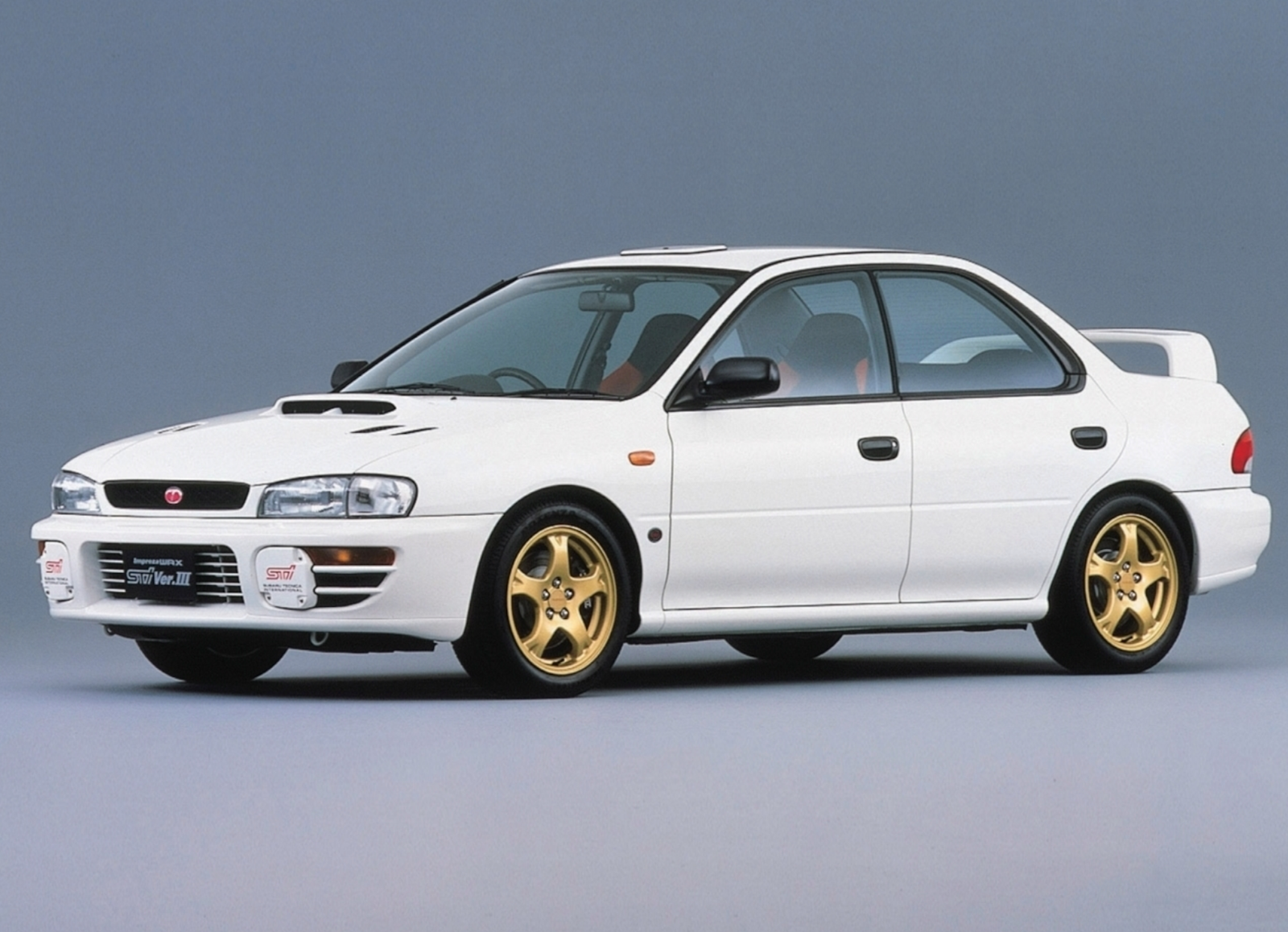
- WRX STI Version 3 (January 1997): This version is highly regarded for its robust engine and striking appearance.
- Engine: EJ20K (semi-closed deck block, larger turbo – IHI VF23/VF24 for sedan/wagon).
- Key Changes: New front bumper with larger fog light covers, revised rear wing, stronger gearbox, larger brakes, blue Alcantara interior with red stitching.
- Type R STI Version 3 (Coupe): The first 2-door coupe variant of the STI, featuring lightweight construction and a revised chassis. It came standard with DCCD.
Peak Performance and Legendary Editions: Late Generations (1997-2000)
The final iterations of the first-gen WRX and STI pushed the boundaries of performance, culminating in some of the most sought-after and collectible models.
GC8F (October 1997 – September 1998)
This period saw the introduction of the STI Version 4 and the legendary 22B.
- Engine (WRX): EJ20K (semi-closed deck block, larger turbo – IHI VF23/VF24 for sedan/wagon).
- WRX STI Version 4 (October 1997): Featured significant mechanical upgrades.
- Engine: EJ20K (now with a red-top intake manifold).
- Key Changes: Larger intercooler, stronger 5-speed gearbox (TY856VB1AA), lighter flywheel, new multi-spoke 16-inch wheels, updated interior with red STI branding.
- Type R STI Version 4: Continued the coupe legacy with DCCD.
GC8G (October 1998 – September 1999)
The GC8G brought the STI Version 5, marking further refinements.
- Engine (WRX): EJ205 and EJ207 (first use of the revised engine code for STI).
- WRX STI Version 5 (October 1998): Focused on chassis and suspension improvements, along with aesthetic tweaks.
- Engine: EJ207 (Open deck block (2001+ are all Semi-closed))
- Key Changes: Larger 16-inch wheels, revised front bumper with larger air intake, updated rear wing with adjustable angle, revised suspension tuning, carbon fiber trim in the interior.
- Type R STI Version 5: Continued as the coupe variant.
GC8H (October 1999 – August 2000)
The final iteration of the first-generation, culminating in the STI Version 6 and the rare S201.
- Engine (WRX): EJ205 and EJ20
- WRX STI Version 6 (September 1999): The swansong of the GC8 chassis, representing the pinnacle of its development.
- Engine: EJ207 (Open deck block (2001+ are all Semi-closed)
- Key Changes: Minor cosmetic updates, redesigned seats, further suspension tuning, Brembo brakes on some limited editions (e.g., RA Spec C).
- Type R STI Version 6: The ultimate coupe variant for the first generation.
Special Editions: The Icons
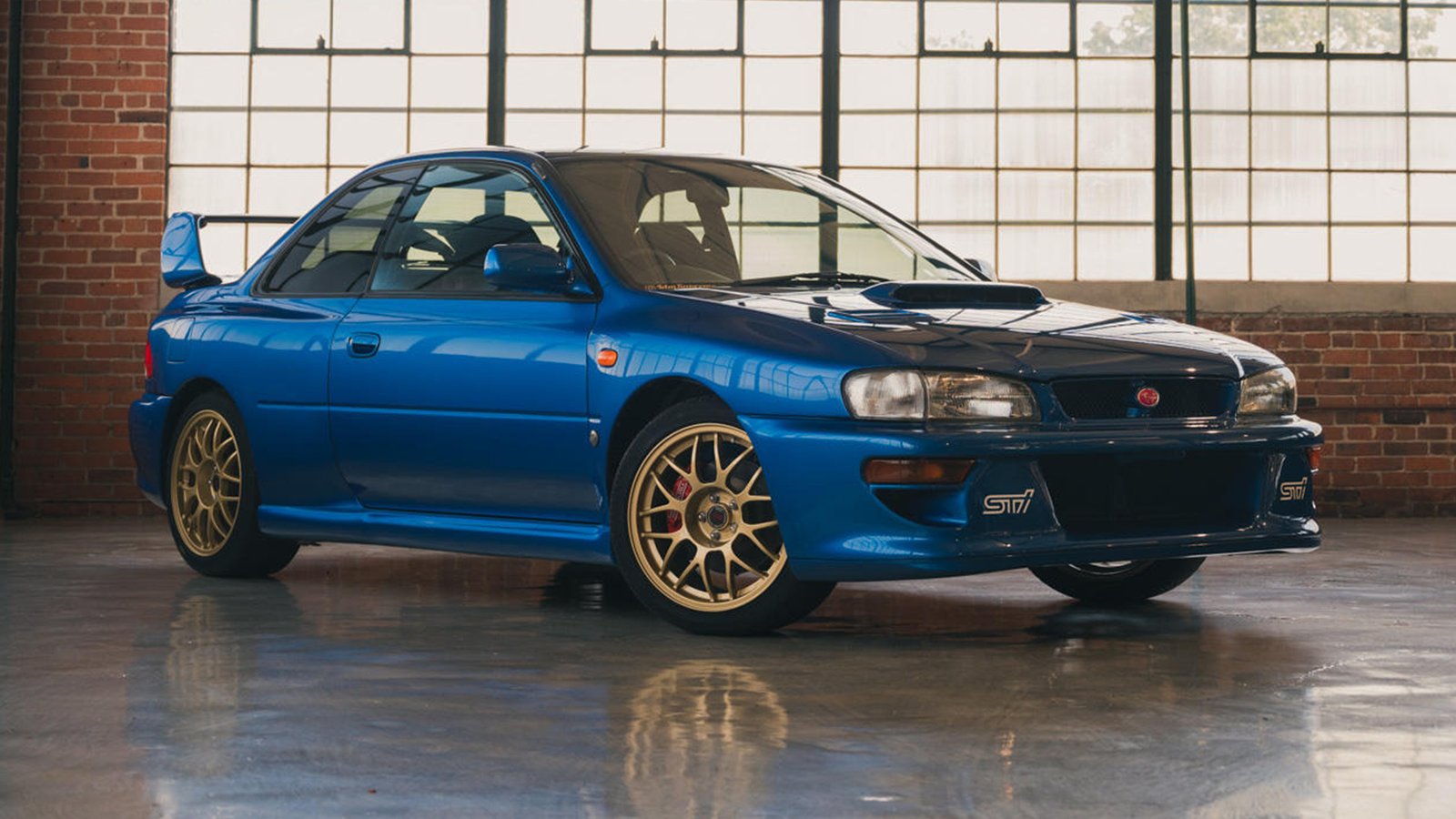
- Impreza 22B STI (March 1998): A legendary wide-body coupe built to celebrate Subaru’s 40th anniversary and its third consecutive WRC manufacturers’ title. Only 400 were made for Japan (plus 24 for export).
- Engine: EJ22G (2.2-liter, unique to the 22B).
- Power: 280 PS (206 kW) at 6,000 rpm (widely believed to be higher).
- Torque: 363 Nm (268 lb-ft) at 3,200 rpm.
- Key Features: Wide-body fenders, unique front bumper, adjustable rear wing, forged BBS wheels, Bilstein suspension, reinforced chassis. It is one of the most collectible Japanese performance cars ever.
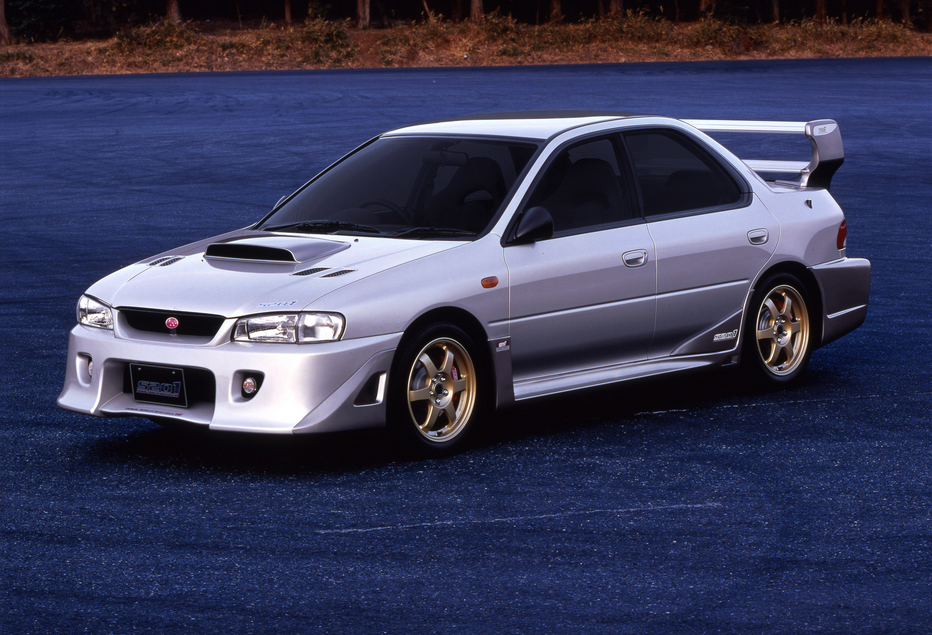
- S201 STI (April 2000): The final limited-production model of the GC8 chassis, a “super tuner car” from STI.
- Engine: EJ207.
- Power: 300 PS (221 kW) at 6,500 rpm.
- Torque: 353 Nm (260 lb-ft) at 4,000 rpm.
- Key Features: Aggressive body kit (unique front bumper, side skirts, massive rear wing), upgraded suspension, lightweight components, unique interior. Only 300 units were produced.
The Technical Heartbeat: EJ20 Engine Evolution
Central to the WRX’s identity was the EJ20 flat-four engine. Over its first generation, it underwent continuous development:
Throughout its life, the EJ20 utilized various IHI turbochargers (e.g., VF10, VF12, VF22, VF23, VF24, VF28, VF29), each contributing to the incremental power and torque gains.
Chassis, Drivetrain, and Rally Success
The GC/GF chassis was a robust and well-balanced platform.
- Suspension: MacPherson struts at all four corners provided excellent handling and durability, especially for rally applications. STI models featured stiffer springs, upgraded dampers, and thicker anti-roll bars.
- All-Wheel Drive: Subaru’s symmetrical AWD system was a core strength. Early models used a viscous coupling center differential. From the GC8D Type RA STI Version 2 onwards, the Driver’s Control Centre Differential (DCCD) was introduced, allowing the driver to manually adjust the torque split between the front and rear axles (from 35:65 to 50:50), significantly enhancing control and adaptability.
- Brakes: Early models featured 4-pot front and 2-pot rear calipers. Later STI versions received larger discs and calipers, with some limited editions eventually featuring Brembo components.
- Transmission: While the 5-speed manual was standard, STI models often benefited from strengthened gears, closer ratios, and more robust casings to handle the increased power.
The first-generation Impreza WRX and STI dominated the WRC, securing three consecutive manufacturers’ championships from 1995 to 1997 with legendary drivers like Colin McRae and Richard Burns. This rally success directly fueled the street car’s appeal and its continuous development.
Conclusion
The first-generation Subaru WRX, from its humble beginnings to the fire-breathing 22B STI and S201, represents a golden era for performance cars. It was a vehicle born out of passion for motorsport, meticulously refined over eight years, and delivered groundbreaking performance in a practical package. Its distinctive styling, potent boxer engine, and unmatched AWD prowess created a legend that continues to captivate enthusiasts, cementing its place as one of the most influential and beloved Japanese performance machines of all time. The GC8/GF8 chassis laid the foundation for every WRX that followed, leaving an indelible mark on automotive history.
Interesting Facts
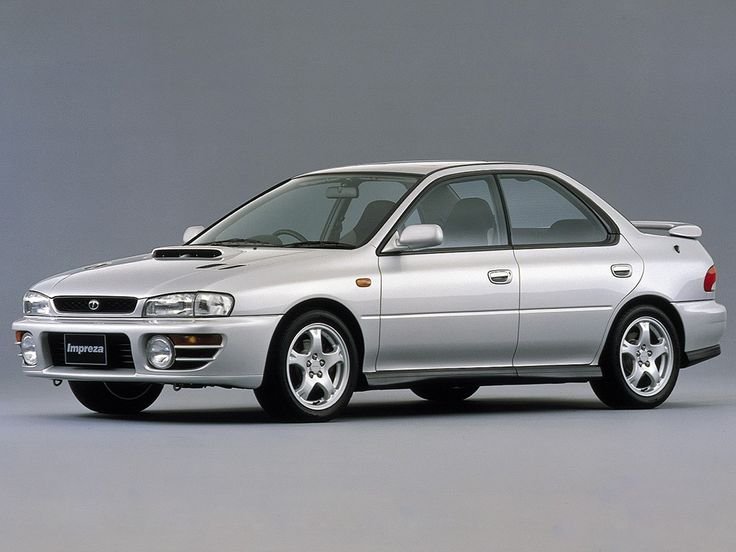
- The first WRX models were released in Japan 1992
- Australian Markets received the WRX models from 1994
- North American markets never received the WRX version of the first generation Impreza.
Explore the different WRX Models Produced
From the classic legends to the latest models on the block, WRX Universe is your gateway to exploring the diverse lineup of WRX models. We’ve got you covered with information, history and specifications.
Subaru WRX
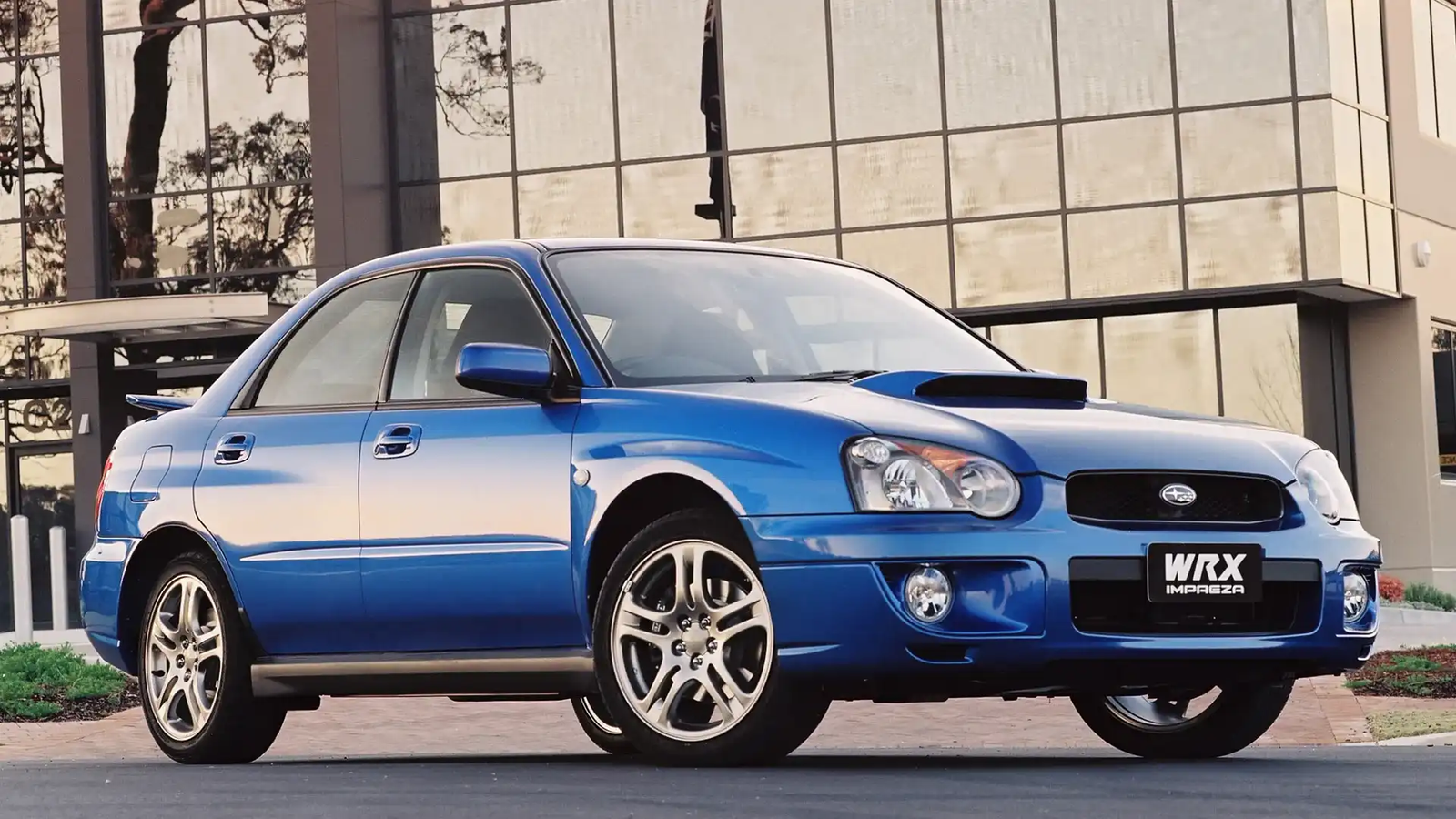
The Subaru WRX, a name synonymous with high performance and rally heritage, has carved out a unique niche in the automotive world.